
I cannot but keep pondering the motives of my life, what has repeatedly pulled me in, and what I keep returning to. From the moment my brain allows me to remember, to this day, I’ve had an immense sense of importance in life, of destiny, of greatness awaiting somewhere ahead. But as the years pass, and as I continue on this endless path of becoming, of choices and creations, I keep trying to figure out the thing I ought to be, to do, and to create. What is my purpose? What is my mission in life?
That is, of course, a question of passion. As a talented man, I have many options. I can do and be many things, and I believe I can succeed at quite a few of them, to some degree. But I find many of those things boring and meaningless on the larger scale of the world. I increasingly believe that meaning, and passion, are formed at a very early age and rarely, if ever, fundamentally change. So to help answer these bigger questions, I have recently found it useful to look backward, at the things I cared about before anyone cared to notice, the things I was irrationally curious about before there was money, status, or a particularly good reason to care.
Jeff Bezos has a line I like: “You don’t choose your passions. Your passions choose you.“ Ken Griffin says he had been obsessed with markets since third grade, “for reasons I don’t quite understand.“ I find something deeply true in that. Your behavior may already be telling you what you care about. What repeatedly pulls you in? What do you voluntarily spend hours doing? What did you care about before anyone paid you? What do you keep returning to?
When I think back to the formative experiences I’ve had, there is one that I feel helps answer this question better than most. My mother is a fashion designer, and has been since I was born. She designs, produces, and sells clothes for women, from simple shirts and pants to summer dresses, evening dresses, and even wedding dresses. When I was a kid, she had just started her own designer brand. It began modestly and slowly grew, and much of it was literally built inside our house.
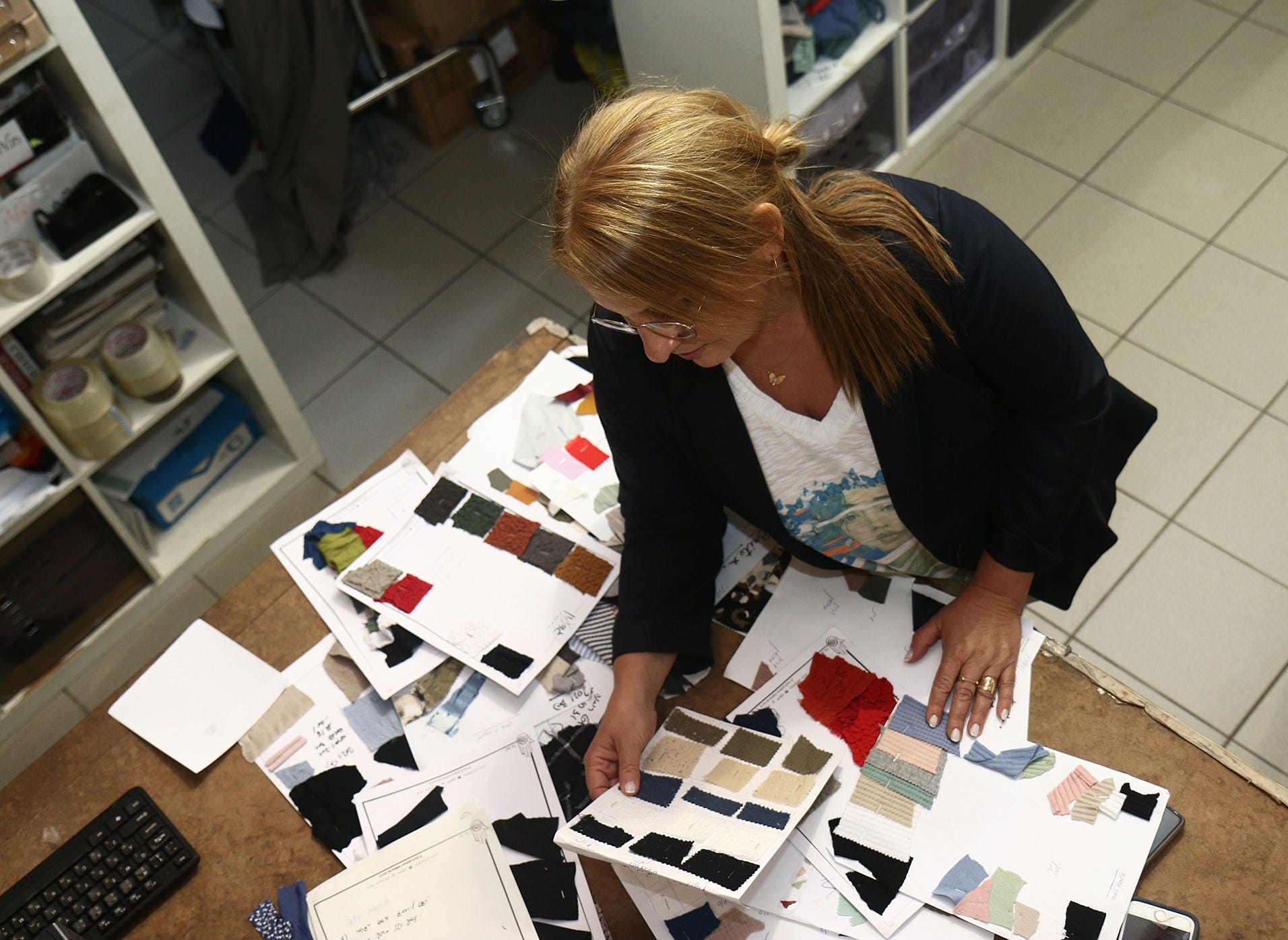
I remember her laying huge pieces of cloth across the kitchen floor. I would stand on one end of the fabric to keep it in place while she cut through the other side with scissors. Then I would go to school and my teachers would be wearing those clothes. The thing that just days earlier had been lying on the floor of my kitchen, with me standing on one end while my mom cut the other, was now on the lady of authority standing in front of me. Teachers would stop me and say, “Say hey to your mom for me.“ Sometimes my friends’ mothers would stop me and ask, “Are you the son of Smadar?“
I don’t think I understood at the time how formative this was for me. I was watching my mom create something as fundamental to human life as clothes, essentially from nothing, and then watching those things leave our house and become part of other people’s lives. The act of creation did not feel foreign to me. It felt within reach. Things weren’t mysterious objects that simply appeared in the world. Someone had to make them. The shirt you put on in the morning, the dress someone wears to a wedding, the things we use so naturally that we forget anyone had to create them in the first place. I saw them before they became objects. I saw the cloth on the kitchen floor.
I think that left two very large impressions on me -
The first was an almost irrational confidence that I could just make things. Seeing how things everyone else took for granted were actually made, removed some of the unknownness of the process. They stopped being black boxes - if clothes could be created on my kitchen floor, then why couldn’t everything else be created too? And why couldn’t I be the one to create it?
I think this is why, as I played computer games with my friends, my brain naturally started to think, “umm, maybe I can make a game too.“ And there I was, not even ten years old, learning how to make my own games. For my friends, playing a game was simply a consumption experience. For me, almost instinctively, it became a question of creation. How was this made? Could I make one too? That was one of the earliest nudges that took me off the regular path and onward into my own strange and unique life experience. And so just a few years later, at thirteen and through my early teens, I ended up creating massive game hits in Israel, eventually reaching around 20% of the country’s population.
It is probably the same reason that, after coming back from a weekend hiking tour as a kid, I decided to start my own hiking tours in the small town where I grew up. Someone had organized the hike I had just been on, so hiking tours were clearly a thing a person could create, and if a person could create one, I could create one too. That instinct seems to have stayed with me ever since: the world is not made of black boxes. It is made by people.
But I think the second impression was even more important. It was not only that I wanted to make things. I became drawn to the idea of making things that enter people’s lives so deeply that eventually they stop feeling like products at all. Things that become fundamental, almost invisible through their familiarity.
Clothes are perhaps the purest example of this. A shirt is an object someone designed, engineered, produced, sold, and distributed, yet none of that is present in your mind when you put it on in the morning. It simply becomes part of you. It affects how you look, how you feel, how you present yourself, sometimes even how you understand yourself, but you hardly think of it as technology.
I, of course, grew up with computers rather than fashion, and technology became my own medium for creation. It became my version of cloth. I think this is why I was so drawn to computers, social media, phones, early smartwatches, and the people who built them. Steve Jobs and Mark Zuckerberg interested me not primarily because of the businesses they built, or even because of the scale of their success, but because they created products that became fundamental experiences of individual human beings.
You woke up and put on your clothes, and then you picked up your phone. These objects became part of how you communicated, how you experienced other people, how you expressed yourself, and eventually even how you understood yourself. The technology moved closer and closer to the person until, in some cases, it became difficult to say where the tool ended and the person began. There is something about that transition that has always pulled me in.
And I think this also explains why I have always been drawn to people like John Locke, and to that period of history when ideas about liberty, government, rights, and the individual were being invented and argued over. At first glance, political philosophy seems very far from consumer technology. But I increasingly think my attraction to both comes from the same place.
The technology Locke and others were building was made of ideas. Ideas that were once radical inventions, but over time became embedded so deeply into society that we began to experience them almost as truths of nature. The individual has rights. Power should have limits. Governments derive legitimacy from the people. These were not always obvious truths. People had to formulate them, write them down, argue for them, build institutions around them, and fight to preserve them.
There is something extraordinary to me about creating something that becomes so foundational that people eventually forget it was ever created, when an innovation moves from invention into reality so completely that it ceases to feel novel or external and simply becomes part of the natural texture of life. That, I think, is the pattern I keep finding when I look backward. It is not really clothes, or games, or computers, or political philosophy in isolation, but the act of creating something that fundamental.
And this is why I keep finding myself pulled toward interfaces. The interface between the person and the computer, between thought and action, between intelligence and the human being. There are much more rational businesses I could build. There are industries with obvious problems, enormous TAMs, clearer business models, and probably easier ways to make money. I’ve had many opportunities throughout my life to work on different products and companies, some of which turned out to become very large and successful. But I find it extraordinarily difficult to spend my life on a problem merely because it makes sense.
I am not particularly driven by profits, nor am I capable of becoming deeply passionate about something simply because a spreadsheet says the market is large. That probably makes me a bad capitalist. Carnegie and Rockefeller would be disappointed. Benjamin Franklin, I think, would understand.
Every person, but especially every founder, has to understand their own peculiar strengths and obsessions and then double down on them. There is very little point in wishing you were motivated by what motivates somebody else. Passion chooses you. And when I look backward, the pattern feels increasingly clear: the clothes on my kitchen floor, the games I tried to build before I was ten, the products I became obsessed with, the ideas and people from history I kept returning to, the computers, the phones, the interfaces.
They are all, in some strange way, the same thing.
I want to create technology that disappears. Technology that becomes so natural, so personal, and so intertwined with you that eventually you stop thinking of it as a product at all. Personal intelligence should feel less like software you open and more like a shirt you wear. It should dissolve into your identity and your sense of self. It should become part of how you communicate, how you think, how you express yourself, and ultimately how you create.
Because perhaps creation itself is the purpose I’ve been circling around this entire time. My mother created clothes that became part of other people. Locke and others created ideas that dissolved into the foundations of society. I want to create technology that does the same.
Adam